


Quick answer: Person-centered memory care treats each resident as a whole person—honoring their history, preferences, and relationships—rather than focusing solely on their diagnosis. At Episcopal Church Home (ECH) in Louisville, KY, this approach shapes everything from daily routines to how care teams are trained and organized.
 When a loved one is living with Alzheimer’s disease or another form of dementia, the questions become deeply personal.
Will they still laugh at the songs they’ve loved? Will someone know how they take their coffee? Will they be treated as more than a diagnosis?
Those questions matter just as much as the medical ones. Because while safety and clinical care are essential, families also want to know that their loved one will continue to be treated with dignity and compassion.
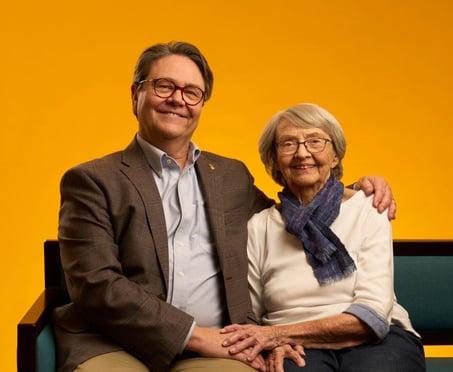
For families like Mark Weingand’s, those questions are deeply personal. He watched as changes in his mother, Betty Weingand, became more difficult to ignore, and knew it was time to seek more help. What he wanted most for her was to find a community where she felt comforted, known, and cared for. Seeing Betty smile, enjoy her days, and feel at home in a memory care community helped reassure Mark that finding the right care was the best choice he could make.
That’s exactly what person-centered memory care is designed to do.
At Episcopal Church Home, this philosophy guides our interactions, routines, and relationships. Here’s what person-centered memory care really looks like—and why it can make such a meaningful difference for residents and their families.
What does Person-Centered Mean?
Person-centered memory care places the individual, not their diagnosis, at the center of every care decision. Instead of organizing care around schedules or what’s most convenient for staff, this approach puts the resident first.
Care teams take time to learn each resident’s life story, interests, routines, and preferences. They discover the music that brings back happy memories, the hobbies that have always brought joy, whether someone prefers a quiet morning or being surrounded by friends, and even the little comforts that help them feel at home.
These details aren’t just nice to know—they’re an important part of quality care.
That kind of attention makes a meaningful difference for residents like Betty. At ECH, staff took time to understand the routines, relationships, and activities that brought her comfort. For her son, Mark, he knew he’d found the right community when he saw his mom was still being treated as the same person she had always been.
Research shows that those familiar routines, meaningful relationships, and personalized experiences can help reduce anxiety, encourage engagement, and create more moments of connection.
Person-centered care also recognizes that families remain an important part of a resident’s life. Loved ones are welcomed as partners, helping care teams better understand each resident’s unique story and continuing to share in meaningful moments together.
What is Memory Care?
Memory care assisted living is a specialized form of assisted living designed specifically for people with Alzheimer’s disease or another form of dementia.
While residents receive support with everyday needs such as personal care, medication management, meals, and daily routines, memory care also provides services tailored to the unique needs of memory loss.
That includes:
- Secure neighborhoods designed to allow for safe wandering
- Team members specifically trained in dementia care
- Activities that encourage cognitive engagement and emotional well-being
- Comfortable, easy-to-navigate spaces that feel welcoming instead of institutional.
Great memory care goes beyond safety. Its purpose is to help each resident continue experiencing joy, purpose, and connection. That’s where a person-centered approach makes the biggest difference.
Bringing Person-Centered Care to Life
A Household Model That Becomes Home
ECH’s assisted living memory care is organized around a household model, a deliberate design choice that creates smaller, more intimate living environments. Each household has a consistent team of care workers who get to know residents in a personal way.
This consistency matters. Familiar faces reduce anxiety for people living with dementia.
For Mark and Betty, the familiarity stood out when it was time to transition into memory care. The environment at ECH felt warm and comforting. The household model helped create the consistency that made Betty feel at home.
When a resident knows the person helping them get dressed in the morning, when routines feel predictable and safe, daily life becomes more manageable.
Consistent Care Through Versatile Workers
One of the distinctive features of ECH’s memory care approach is its use of versatile workers: team members who are cross-trained to support residents across a range of daily needs rather than rotating through specialized roles. A versatile worker might help a resident with breakfast, join them for an activity, and assist with personal care—all in the same shift.
This model builds genuine relationships. Residents aren’t interacting with a rotating cast of unfamiliar faces. They’re spending time with people who know their story and the small details that make them feel seen and understood.
Mark saw that difference firsthand. The team at ECH didn’t just help Betty with her daily needs—they formed real connections with her. They celebrated the days she was especially talkative, noticed when she’d hum along to her favorite songs, and even bonded with her over hobbies like knitting.
“She’s teaching me to knit, and I’m teaching her too,” Betty said.
“Our team understands that our residents are unique individuals,” added Beverly Edwards, Vice President of Residential Healthcare. “Our goal is to help them live their best life while caring for them in mind, body, and spirit.”
For Betty’s family, that approach and the friendships formed with team members have made all the difference.
Related Blog: How Versatile Workers Enrich Memory Care
Person-centered memory care also means activities and community events are shaped around residents’ individual histories instead of a one-size-fits-all calendar. Team members work to understand what brings each resident joy and weave those elements into daily life.
For Betty, that meant opportunities to reconnect with things that made life meaningful. Mark watched his mom enjoy music, spend time with friends, and even discover a love for painting. Each activity helped Betty stay engaged, express herself, and find new ways to enjoy each day.
Meaningful engagement like this supports cognitive function, reduces behavioral symptoms associated with dementia, and helps residents feel valued as people.
Meaningful Days Built Around Each Resident
At ECH, residents’ families are genuine partners. From the initial transition into memory care through the ongoing journey of life with dementia, family members are kept informed, included, and supported in their own experiences of this process.
That partnership stood out to Mark. The team at ECH kept him informed about Betty’s care and made sure he never had to wonder how she was doing, reassuring him that he was staying connected to his mom’s experience.
Support for the Whole Family
Choosing memory care for a loved one is rarely straightforward. It can involve grief, even guilt, and the courage to recognize when a loved one needs more care than they can receive at home. But the right community doesn’t just support your family member. It can support you, too.
That’s what Mark found when Betty moved into ECH. Mark noticed the change in his mom. Betty was enjoying the little things again—daily exercise, fresh air, and meaningful friendships.
For Mark, the best part was her smile. Every time he saw her smiling, he knew they made the right choice.
Read Mark and Betty’s Story: Her Smile is Everything: Finding the Care Mom Deserved
Experience the Difference for Yourself
If you or a loved one is exploring memory care assisted living, you don’t have to navigate this alone. The team at Episcopal Church Home is here to answer your questions, walk you through what memory care looks like in practice, and help you decide whether it’s the right fit for your family.
To schedule a complimentary tour of Episcopal Church Home, contact Elizabeth Pace, Director of Community Relations, at 502.736.8043 or epace@erslife.org.