


Quick answer: A dementia or Alzheimer's diagnosis can feel overwhelming, but it's the beginning of a new journey—not the end of a meaningful life. This post walks your family through what comes next: learning about the condition from trusted sources, having early conversations about your loved one's wishes, planning for safety and support at home, caring for yourself as a caregiver, and recognizing when it may be time for expert help. When that moment comes, Episcopal Church Home (ECH) offers compassionate, person-centered memory care designed to help residents feel safe, engaged, and known—so you don't have to navigate this alone.
Hearing that someone you love has dementia or Alzheimer's can stop you in your tracks. Maybe you saw it coming. Maybe it caught you completely off guard. Either way, a diagnosis can bring a lot of emotions—and questions—at once.
For many families, knowing where to begin can feel overwhelming.
While every person’s experience with dementia is different, a diagnosis does not mean that life has to stop. There is still time for meaningful experiences, familiar routines, connection with loved ones, and moments of joy. Understanding what comes next can help your family approach the journey with greater confidence.
A Diagnosis is the Beginning of a Journey
Dementia is not one specific disease. It is an umbrella term for changes in memory, thinking, and other cognitive abilities that can interfere with everyday life. Alzheimer’s disease is the most common cause, but there are others—each with its own patterns and progression.
Some people experience gradual changes over many years, while others may have a more rapid progression. Your loved one’s healthcare provider can help your family understand the diagnosis, discuss treatment options, and identify changes to watch for over time.
While the diagnosis is important, it is only one part of who your loved one is.
Your loved one is still the same parent, spouse, grandparent, sibling, or friend they were before the diagnosis. Their interests, relationships, memories, and preferences are still important.
Learn What You Can, When You Can
After a diagnosis, it can be tempting to research everything all at once. But dementia is a complex condition, and there is a lot of information available, including information that may not be relevant to your loved one.
Start with reliable sources and your loved one’s care team. Ask questions about your loved one’s specific experiences.
It can also be helpful to learn about the stages of dementia; understanding common changes can help your family prepare for the future.
Knowledge can make the unknown feel a little less overwhelming.
Related Blog: Free Dementia Guide Offers Answers, Hope, and Connection

Talk With Your Loved One About Their Wishes
One of the most valuable things families can do after a dementia diagnosis is to have important conversations while their loved one can still clearly express their preferences.
These are a few common questions:
- What kind of care would they want if they need more support in the future?
- Who would they trust to make healthcare decisions on their behalf?
- What financial and legal plans should be put in place?
- What does a good day look like for them?
- What routines, activities, or traditions are meaningful to them?
- What would help them feel safe, cared for, and respected?
These conversations don’t need to happen all at once, and your loved one doesn’t have to have clear answers to every question right away.
The goal is to ensure your loved one’s voice remains at the center of decisions, even if they are unable to make decisions in the future.
Begin Thinking About Safety and Support
As dementia progresses, tasks that once seemed routine may become more difficult. Taking medications, driving to the store, cooking meals, and staying on top of the finances can eventually present new safety concerns.
That does not mean your loved one needs to give up all independence.
Instead, look for opportunities to provide the right amount of support when it’s needed. Small changes, like simplifying routines, adding reminders, or having extra help in the home, may help your loved one stay independent longer.
It is also important to recognize when needs are changing. Increased confusion, wandering, falls, and difficulty managing personal care are signs that more support is needed.
Remember That Caregivers Need Care, Too
 A diagnosis like this affects the entire family. If you become a primary caregiver, it can be easy to put your own needs aside while focusing on your loved one.
But caregiving is a long-term responsibility, and you can’t pour from an empty cup.
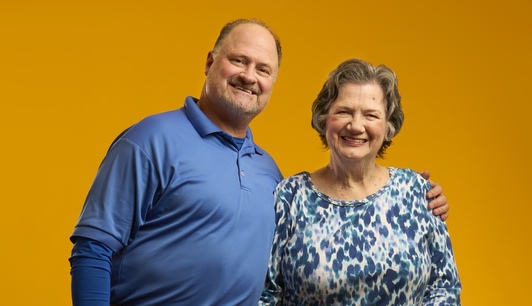
For Howard Bynum, whose mom lives in a memory care neighborhood at Episcopal Church Home (ECH), found that finding outside support helped him care for himself, too.
“Now I can relax,” Howard said. “Before, I worried. Now I sleep better at night.”
Try to accept help when it’s offered. Build a support network. Stay connected with friends and activities that give you energy and perspective.
Asking for help is not a sign that you are failing your loved one. It’s one of the best ways you can care for both of you.
Know When It May Be Time for Expert Care
There may come a point when caring for a loved one at home becomes increasingly difficult or unsafe. Recognizing that moment can be challenging, especially when family members feel guilty about considering a memory care community.
Considering assisted living memory care is not “giving up” on your loved one. For some families, it provides the specialized support, structure, and social connection that allows their loved one to thrive while also giving families peace of mind.
When exploring a community that offers assisted living memory care, look for one that takes the time to understand each resident as an individual. Ask about staff training, daily activities, and how the community supports residents as they age.
At ECH, we provide person-centered memory care in a supportive setting designed to help residents feel safe, engaged, and known.
Related Blog: 5 Questions to Ask When Touring a Memory Care Community
You Don’t Have to Navigate Dementia Alone
ECH’s personalized memory care services provide compassionate, person-centered support, giving residents the care they need while helping families find peace of mind.
“At first, it was difficult even thinking about memory care,” Howard said. “But what I found was relief—for myself and Mom. She had more structure and support, and I could go back to being a son instead of trying to do everything alone.”
If your family is beginning to explore memory care, schedule a tour today. Contact Elizabeth Pace, director of community relations, at 502.736.8043 or epace@erslife.org.