


When a loved one is living with memory loss, families often find themselves asking the same question: what kind of support will truly help them live well? And while safety and care are essential, quality of life matters just as much.
Memory care assisted living is designed to provide that balance, offering a combination of personalized care, enriching experiences, and supportive services that can be difficult to coordinate at home. From daily care to meaningful opportunities for connection, these services work together to support each resident’s overall well-being.
At Episcopal Church Home (ECH), this approach is guided by a not-for-profit mission. As a 501(c)(3) organization, ECH reinvests resources back into its residents and community—and no resident is asked to leave if they outlive their financial resources through no fault of their own. It’s a commitment rooted in compassion, dignity, and long-term peace of mind for families.
 This blog explores the services included in memory care assisted living and how they support quality of life for those living with memory loss.
1. Personal and Clinical Care
ECH’s Memory Care Assisted Living team members are specially trained to support individuals living with memory loss, with a focus on dignity, consistency, and comfort. Each resident has a personalized care plan developed in partnership with their loved ones to support daily routines, preferences, and the small details that matter most.
Team members strive to truly get to know each resident—their history, habits, and what brings them a sense of ease or joy. Residents receive assistance with activities of daily living (ADLs), including bathing, grooming, dressing, and mobility. ECH’s versatile worker model means fewer caregivers enter each apartment, helping reduce the stress and confusion that unfamiliar faces can sometimes cause for those with memory loss. These team members support a range of daily needs, including personal care and medication management, providing more consistency throughout the day.
2. Specialized Services and Life Enrichment
Meaningful activity plays an important role in supporting brain health, emotional well-being, and quality of life. In ECH’s Memory Care Assisted Living neighborhood, programming is intentionally designed to engage residents in ways that feel familiar, enjoyable, and purposeful.
Residents may participate in music and art therapy, word games, and other research-informed activities that support brain health while creating moments of joy. Programming is also enriched by connections to the greater Louisville community, with guest speakers, performances, and special events that bring variety and connection to daily life.
In addition to enrichment programming, memory care at ECH includes a range of supportive services designed to simplify daily life for both residents and their families. These services allow families to spend less time managing logistics and more time focusing on meaningful moments together.
Services and amenities include:
- Support from a registered dietitian
- Rehabilitation therapies
- Transportation for medical appointments, when available
- Access to higher levels of care, including skilled nursing, as needs change.
- Housekeeping and maintenance services
- Beauty and barber services
- A secure, household-style living model
3. Safe, Supportive Spaces Designed for Those With Memory Loss
A common symptom of dementia is wandering, which can pose safety risks in unsecured environments. ECH's Memory Care Assisted Living households help promote safety by offering a secure neighborhood with alarmed doors and trained staff providing oversight. Rather than restricting residents, this design enables wandering within the household—a practice that supports mobility, reduces restlessness, and promotes overall well-being. 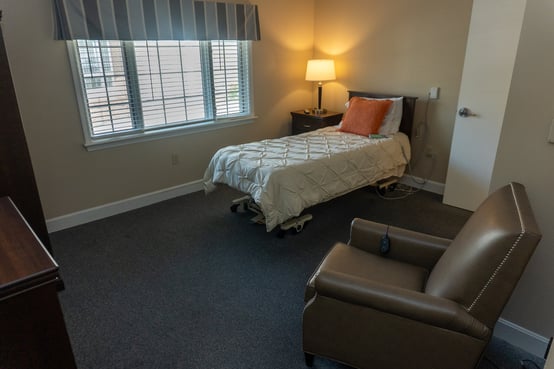
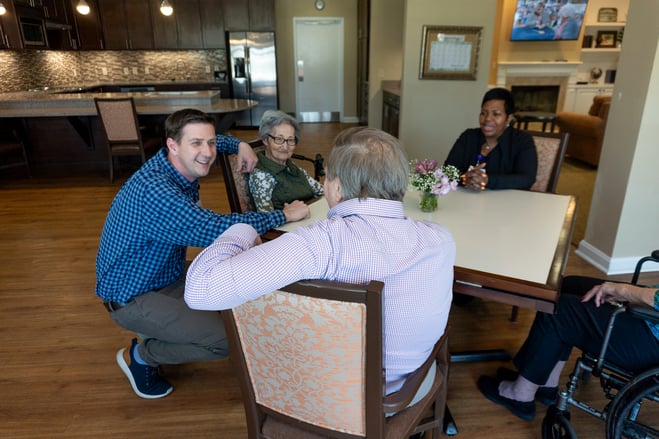
Residents have their own private studio apartments that are easy to navigate, helping reduce confusion and keep essential items within reach. Beyond individual living spaces, the common areas are thoughtfully arranged to feel warm and familiar. Family-style kitchens, shared dining areas, comfortable living rooms, and inviting outdoor spaces all contribute to a sense warmth and community.
Secure outdoor areas also give residents the opportunity to enjoy fresh air and time outside in a safe, supervised setting—something that can have a meaningful impact on mood and quality of life.
4. Family Support and Communication
Memory care assisted living offers a level of peace of mind that can be difficult to achieve at home. Families feel more at ease knowing their loved one is supported by trained professionals who not only understand memory loss but genuinely care about each resident’s well-being.
At ECH, families remain closely involved through regular care conferences, with clear updates on their loved one’s care plan, overall well-being, and any changes along the way. Open communication with the care team helps build trust and helps families know who to turn to with questions or concerns. This ongoing partnership allows care to evolve alongside each resident’s needs while keeping families an active part of the journey.
How Memory Care Enhances Quality of Life
Quality of life in memory care goes beyond meeting physical needs—it’s deeply connected to a person’s sense of purpose, comfort, and connection with others.
The U.S. Surgeon General has identified loneliness as an epidemic. Its impact on physical, mental, and emotional health can be comparable to smoking 15 cigarettes a day. For individuals living with memory loss, regular social interaction plays a vital role in supporting overall well-being and cognitive engagement.
In ECH’s Memory Care Assisted Living, residents have the privacy of their own suites, along with easy access to inviting shared spaces that naturally encourage connection. Comfortable gathering areas, natural light, and a familiar, home-like setting help residents feel at ease.
Life enrichment activities provide consistent opportunities to engage in experiences that spark joy and foster connection. Whether through group programs or shared meals, residents can engage in ways that feel meaningful to them while still maintaining their independence and personal preferences. With structured opportunities built into each day, residents benefit from a level of engagement that can be difficult to replicate at home.
Just as important, having clinical support and coordinated services in one place means changes in health or ability can be addressed quickly, all within the same community. This continuity helps residents maintain stability and avoid unnecessary disruptions—something that can be challenging when coordinating care across multiple providers.
Together, these elements create an environment where residents can feel secure, engaged, and valued—supporting not just their needs, but their overall well-being.
Is It Time for Memory Care Assisted Living?
To explore ECH’s senior living options, take our short survey—a quick 4–5 minute tool to help you determine the best fit for you or your loved one.

Tour ECH Memory Care Assisted Living
Contact Elizabeth Pace, director of community relations, at 502.736.8043 or epace@erslife.org to schedule a complimentary tour of ECH's Memory Care Assisted Living neighborhood and no-cost printed copy of our Dementia Guide—a clear, compassionate resource designed to answer the questions families most commonly face on this journey.