


Episcopal Church Home’s memory care assisted living community provides residents with a home in which they can enjoy the highest quality of life possible. It offers an engaging and enriching environment, no matter what level of assistance they may need.
Episcopal Church Home’s (ECH) memory care assisted living offers residents personalized care, a sense of community and belonging, enhanced accessibility, and professional services delivered with compassion. Family members often describe the care as “the care I wish I could provide,” highlighting our person-centered approach.
Our highly trained, versatile workers are a welcome addition to ECH’s care team and help provide the best care possible to all who call ECH home. This versatile-worker care model allows team members to work closely with residents and their families to create comprehensive care plans, supporting peace of mind and enhanced well-being.
Consistent Care Builds Meaningful Relationships
Trained versatile workers spend more time with residents, which allows for smaller staff-to-resident ratios. This ensures the ability to provide consistent care and fosters an increase in meaningful friendships. Several residents have even shared that ECH team members feel like family.
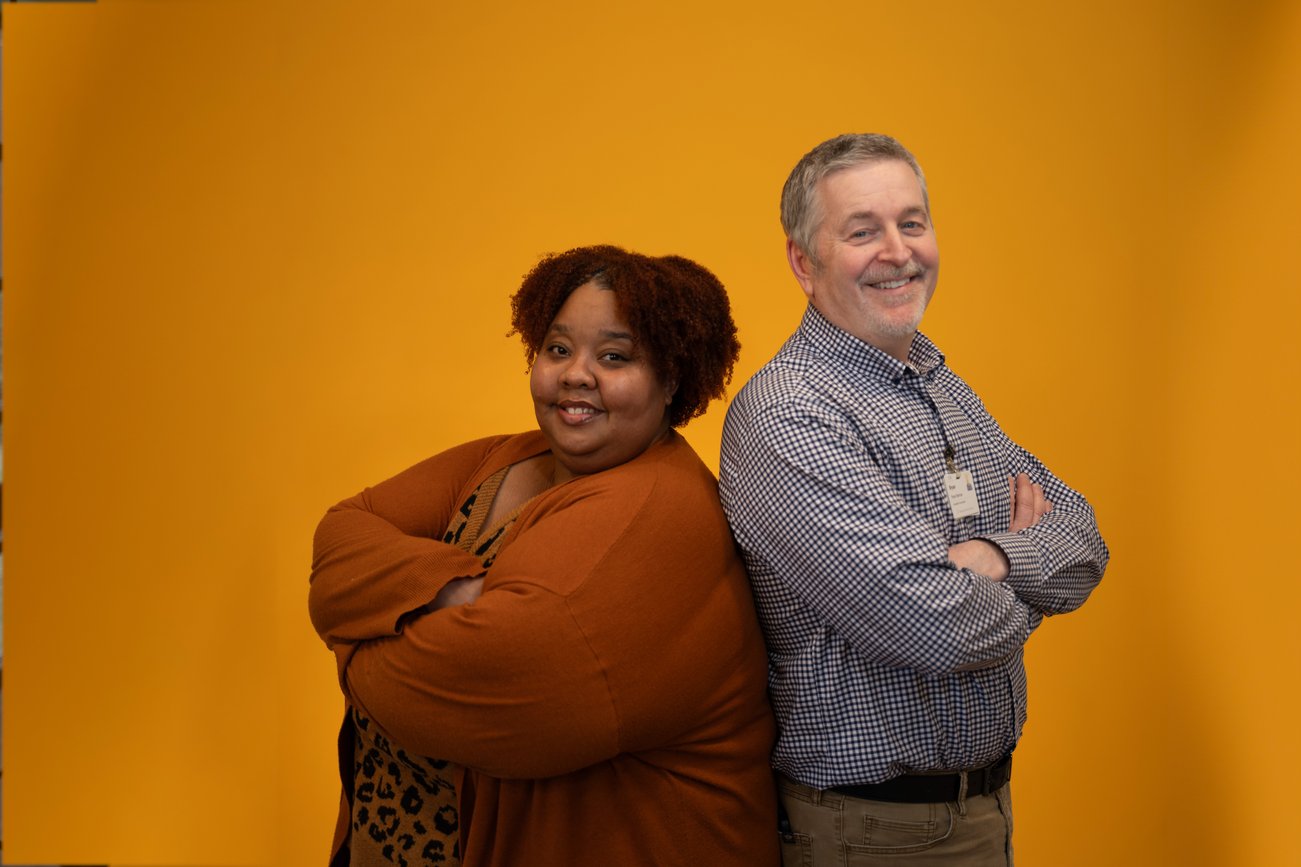
Annie Marks, a versatile worker at Episcopal Church Home, and Bryan Berman, a household coordinator.
Memory Care Spaces Feel Like Home
Memory Care Assisted Living households feature beautifully designed spaces that feel like home, but with all the support your loved one needs. Residents live in private suites surrounded by their belongings, connected to inviting common areas with fireplaces, cozy seating, and large scenic windows that allow for plenty of natural light.
These common spaces encourage residents to socialize, play games, and participate in activities, creating a sense of community many missed when previously living alone.
With the introduction of versatile workers who can take on multiple responsibilities, fewer team members enter residents’ suites—avoiding the discomfort of strangers for those living with memory loss. Versatile workers handle most daily tasks, offering personalized, consistent care akin to having a live-in caregiver.
Related Blog: 8 Signs That Your Elderly Loved One Needs Memory Care
A New Approach to Care
“It looks like a home,” said Austin Hyle, a versatile worker and certified medication technician. “You come into the community, and there's a family room with a faux fireplace in the kitchen that looks like someone's home. It is much more comfortable for residents to sit and enjoy it.”
Annie Marks, another versatile worker, explains, “I’m the main caregiver for residents throughout the day. I remind them to do things, enjoy activities with them, serve meals, and even handle light housekeeping.”
In the past, multiple staff members handled tasks like cleaning, meals, and activities, which could disorient residents. The versatile worker model consolidates these responsibilities, allowing residents to build stronger connections with fewer caregivers.
More Time with Each Resident
For Ronald Charles, another versatile worker, one of the most touching moments of his career was when the resident’s family member embraced him as one of their own. “A family member of a resident told me, ‘Ronald, you’re a part of my family.’ It was such an honor,” he shared.
As a versatile worker, he cares for six or seven residents on a typical day, a number he and other team members say is much better than typical continuing care retirement communities. The versatile worker model allows team members to spend more quality time with residents. This naturally builds closer relationships, especially for people like Ronald, whose love for older adults stems from his close relationship with his grandfather, inspiring his dedication to memory care.
Related Blog: ECH NAMED BEST LOUISVILLE-AREA NURSING HOME
Personal Friendships with Each Resident
Before the use of the versatile worker care model, residents would see a housekeeper, a certified nurse assistant, as well as someone else for activities, and maybe another to help with dining, said Bryan Berman, ECH household coordinator.
“Taking the versatile worker approach has wrapped all that up into one,” Bryan said. This model benefits residents by allowing team members to truly learn residents’ habits and preferences—enabling more personalized care. Bryan added, “Versatile workers try to learn as much as possible—from what the residents like to eat, to how they like their suite cleaned, and the everyday schedule of each resident.”
“Before, when we had several different people, they were seeing more faces, which could confuse residents,” he said. “But now, they treat each other more like family. Our residents have deeper relationships with our versatile workers, and our versatile workers have deeper relationships with our residents.”
Vice President of Residential Healthcare, Beverly Edwards, is also pleased with the change. “I feel the versatile worker brings a piece of calmness and routine to our residents,” she said. “You're seeing the same person every day, and ultimately, they're doing everything for you—kind of like if you were to bring someone into your mother's home. I love that we have versatile workers at ECH. It allows us to be very person-centered,” Beverly added.
Related Blog: Her Smile is Everything: Finding the Memory Care Mom Deserved
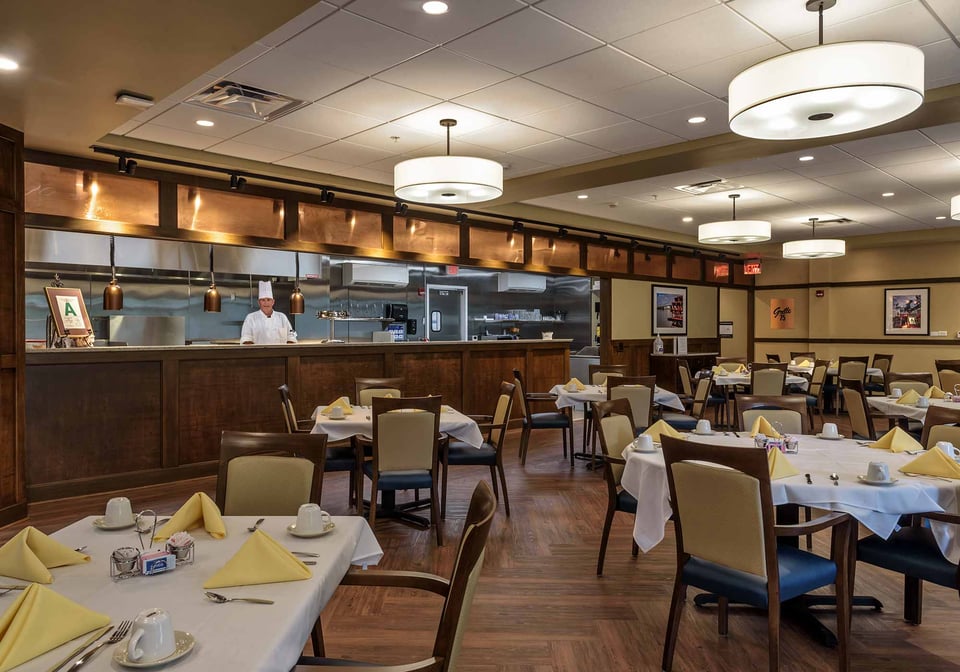
Residents and their families praise the food at Episcopal Church Home.
Caring For Residents Like They’re Family
ECH’s versatile-worker model has earned praise from residents and their families. “I have a very soft spot in my heart for older adults,” Austin said. “I’ve always been there for my grandparents, and that mindset extends to my work here.”
“Episcopal Church Home has a great reputation,” he added. “And I believe part of our reputation is how much we care for our residents. Family members come in daily, telling us how much they appreciate us.”
Ronald isn’t alone in being considered a family member by residents, Bryan said. “It is an honor to care for our residents so closely that they consider us a part of their extended family.”
Is it Time for Memory Care?
Finding the right memory support community for a loved one with memory loss can be a challenging and emotional journey. Episcopal Church Home offers a holistic approach to care, with an expert team ready to support your loved one’s needs—and provide you with peace of mind.
To schedule a free tour of ECH today and learn more about our memory care community, contact Elizabeth Pace at 502-736-8043 or epace@erslife.org. This is the perfect opportunity to see why so many families trust Episcopal Church Home for themselves and their loved ones.