



Moving a family member with dementia or Alzheimer’s disease into memory care assisted living can be an emotional process. But with a little preparation and the right support, the transition to memory care does not have to feel overwhelming. This blog walks you through what to expect at every stage, from before the move, on moving day, through the adjustment period, and beyond. Knowing what to expect during the transition can help both you and your loved one.
Preparing Yourself and Your Loved One Before the Move
The transition to memory care begins before moving day. How you prepare, both practically and emotionally, can make a meaningful difference in how the move unfolds.
One of the most important decisions families face is how to talk to their loved one about the move, and the right approach will depend on your loved one's stage of memory loss. In many cases, it’s better to gently inform them about their new living situation rather than ask them what they think about moving to a memory-care assisted living community.
It also helps to have a consistent “script” that family members and close friends are all aware of. When different people describe the move in a variety of ways, or offer conflicting reasons for why it is happening, it can cause confusion and distress. Keep the message simple, positive, and consistent. Focus on the things your loved one will gain: a community of people to connect with and professional care and support.
Before moving day, take time to connect with the memory care team. The more they know about your loved one, the more personal and familiar care can feel from day one. You can share their daily routines, personal preferences, music they enjoy, and the foods that bring them comfort.
Packing and Personalizing the Space
When it comes to packing, don’t get overwhelmed, feeling like you need to recreate your loved one's entire previous home. The goal is to create a space that feels familiar, safe, and personalized. Focus on quality over quantity. Meaningful items like a favorite comforter, family photographs, or artwork, and familiar decor can be comforting. The memory care assisted living community will likely provide a suggested checklist of items. Often, their new home will have basic furniture and appliances. Keep the focus on decorative items.
Involve your loved one in packing for the move if you think it will help them. Some older adults find it disorienting and upsetting to see their items being boxed up. Sometimes, it’s better to make the packing decisions while they are napping or on an outing.
Leave behind anything of high sentimental or financial value—a cherished family heirloom, expensive jewelry, or other irreplaceable items. Those living with memory loss may misplace belongings without realizing it, and losing something precious in a new environment can be distressing for everyone.
Moving Day
Moving day is often the hardest day of the transition. Try to keep the day as calm and unhurried as possible. Limit the number of people present if you can. Too many faces and too much activity can feel overwhelming for someone with memory loss. 
Be emotionally prepared for your loved one to ask you to take them back home. This is often a challenging moment families face during a memory care transition, and it does not mean the move was a mistake. When a loved one is expressing resistance to a permanent move into residential care, many memory care professionals recommend easing the transition by avoiding the whole truth.
At first, some families don’t want to do this because they don’t want to feel like they’re lying to their loved one. But there’s an important reason why not sharing the full truth might be acceptable in this situation.
Your loved one likely can’t completely understand the reasons for the move and may be combative at first. Some families find it helpful to start by describing the move as a temporary stay in a hotel while they’re out of town. Using small bites of information to allow your loved one to adjust can help minimize the distress in explaining that this is a permanent situation.
The Adjustment Period
The first few weeks after a move can be challenging, and adjustment takes time for your loved one and for you.
During this period, they may experience disorientation, mood changes, or repeated requests to return to their previous home. They may seem more withdrawn than usual, or occasionally frustrated. These responses are a normal part of adjusting to a new environment. For most residents, these ease in as the new space begins to feel familiar, and relationships with staff and neighbors begin to form.
During this time, stay in close communication with the care team. Share your observations. Ask questions. Let them know what you are noticing during your visits and what you know about your loved one that might help them provide better support. At Episcopal Church Home (ECH), regular care conferences keep families informed and involved in their loved one's care plan, and the team is always available to answer questions and address concerns as they arise.
"Any apprehension I may have felt at first gave way to confidence as I saw the team interact with Mom and other residents."
– Debbie Cahill, daughter of ECH resident Debbie Cecil
Related Blog: Together in Care
Finding Comfort in a New Home
Adjusting to memory care will be different for everyone. It is important not to expect a specific timeline or date for your loved one to get settled, but rather an outline of what to expect.
As your loved one settles into the rhythm of daily life, the visits begin to change as well. You are no longer arriving to check on medications, monitor safety, or manage care needs. You are visiting as a son or a daughter, a spouse, or a friend. The relationship that assisted living memory care fosters with families is one of the things that surprises them most.
"They're all so kind. It feels like home here."
– Betty, ECH Memory Care Assisted Living resident
Related Blog: Her Smile is Everything: Finding the Memory Care Mom Deserved
Take the Next Step
The transition to memory care assisted living is a process, not a single moment, and every family moves through it at their own pace. With the right preparation, the right community, and the right support alongside you, it can be the beginning of a meaningful next chapter.
Contact Elizabeth Pace, director of community relations, at 502.736.8043 or epace@erslife.org to schedule a complimentary tour of ECH's Memory Care Assisted Living neighborhood and receive a no-cost printed copy of our Dementia Guide—a clear, compassionate resource designed to answer the questions families most commonly face on this journey.

Contact Elizabeth Pace at 502.736.8043 or by email at epace@erslife.org, director of community relations, today to get a complimentary tour of ECH’s Memory Care Assisted Living neighborhood and a no-cost printed copy of our Dementia Guide for clear, compassionate answers to common questions.
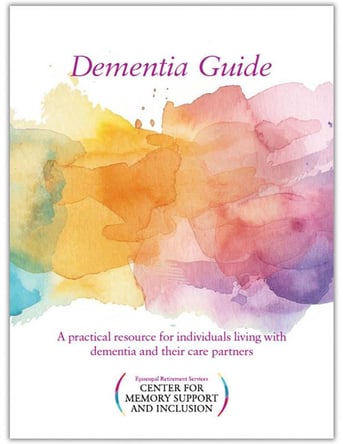
Download Our Free Dementia Guide
Learn more about dementia, including diagnoses and what to expect, communication tips and brain health strategies, as well as practical tools for navigating day-to-day challenges in our newly updated Dementia Guide.