


When families begin researching senior living options, a common misconception is that memory care is simply a more expensive version of assisted living, or that it's only necessary in the late stages of memory loss. This is a myth, and the two serve different needs. Learning the difference and choosing the right fit can make a meaningful difference in your loved one's life.
Memory care assisted living communities are built for individuals living with Alzheimer's, dementia, or other forms of memory loss—offering specialized staff, thoughtfully designed spaces, and programming that supports independence and dignity at every stage. This blog breaks down the differences between assisted living and memory care assisted living so you can make an informed decision for your loved one.
What is Assisted Living?
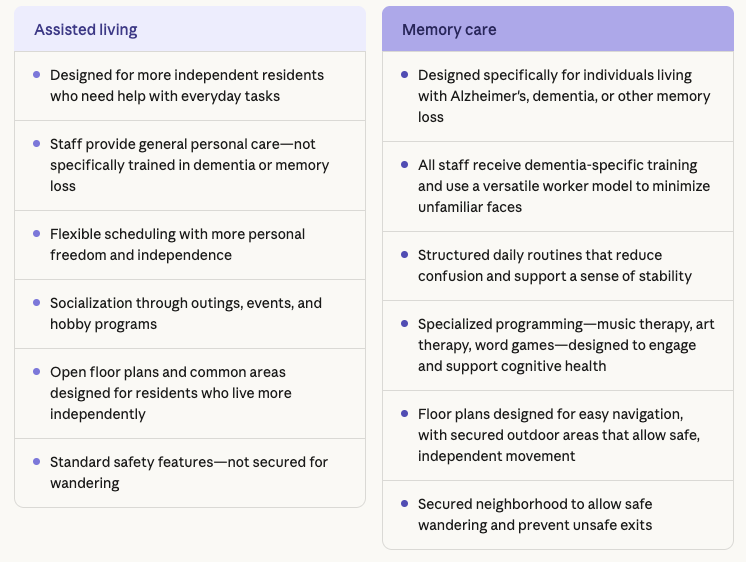
Assisted living at Episcopal Church Home (ECH) supports older adults who need help with their basic day-to-day needs, known as activities of daily living (ADLs)—things like bathing, dressing, eating, mobility, and personal care. A dedicated team of nurses and caregivers is available around the clock to assist with medication management, mobility support, and any health concerns that arise.
Assisted living also helps prevent isolation in older adults. Studies consistently show that an active social life improves mental and emotional health and reduces the risk of cognitive decline. ECH's assisted living community fosters that connection through a vibrant calendar of activities giving residents meaningful ways to form friendships and stay engaged.
Who Is Assisted Living Best For?
Assisted living is a good fit for older adults who value their independence but need extra support to live safely and comfortably. It may be time to consider assisted living if you or a loved one is experiencing the following:
- Forgetting to take medication or taking it incorrectly
- Noticeable weight gain or loss
- Loss of mobility or recurring falls
- Difficulty with personal grooming or meal preparation
- Neglected household maintenance
- Loss of interest in activities they once enjoyed
- Increased isolation
What is Memory Care Assisted Living?
Memory care assisted living communities like ECH are designed specifically for individuals living with memory loss. Unlike assisted living, which supports older adults with a range of everyday needs, memory care assisted living offers specially trained staff, structured programming, and secured spaces—providing a higher level of hands-on support in an environment designed to reduce confusion, promote safety, and support quality of life at every stage.
ECH uses a versatile worker model in which each staff member takes on multiple responsibilities, resulting in fewer unfamiliar faces entering a resident's space each day. For someone living with memory loss, that consistency is comforting and meaningful. Residents live in their own studio apartments within a thoughtfully designed floor plan featuring family-style kitchens, shared dining spaces, comfortable living rooms, and secured outdoor areas.
Daily life in ECH's Memory Care Assisted Living neighborhood is also structured with brain health and emotional well-being in mind. Life enrichment programming includes music therapy, art therapy, word games, and other brain-healthy activities, alongside special guests, performances, and community events that bring variety and joy to each day.
When Memory Care Assisted Living Is the Right Fit
Families often begin their search for additional care when a loved one's needs exceed what can be safely managed at home—or when the demands of caregiving start affecting well-being. While assisted living can support older adults who need help with daily tasks, it is not designed to address the safety risks, behavioral changes, and specialized programming that memory loss requires. It may be time to explore memory care assisted living if your loved one is:
- Experiencing frequent memory lapses or has been diagnosed with Alzheimer’s or dementia
- Increasingly withdrawn, or showing a decline in mental, emotional, or physical health
- Prone to falls or unable to move around safely
- Wandering or frequently confused in familiar surroundings
- Exhibiting signs of agitation or disorientation that are difficult to manage
Two Families, Two Paths—Both the Right Fit
The difference between assisted living and memory care becomes clearer when you hear directly from ECH residents and families.

When sisters Glenna and Shirley first moved to ECH over a decade ago, they were living independently and thriving. But when Shirley's health needs changed, they didn't have to leave the community they called home. Thanks to ECH's continuum of care, Glenna and her sister moved into assisted living so they could stay together right next door. Assisted living gave Shirley the support she needed while preserving the independence both sisters valued. As Glenna put it, "She gets the support she needs, and I still enjoy my independence, right by her side. That's the beauty of assisted living here—you receive as much or as little as you need." Their story reflects who assisted living is designed for: older adults who are engaged, social, and independent at heart—but who benefit from having reliable support close by.
Read Glenna and Shirley's Story: How Assisted Living at ECH Keeps Sisters Together and Thriving
When Betty’s son Mark first noticed memory changes in his mom, he tried to tell himself it was just aging. But after a fall she couldn't remember, it became clear she needed more than assisted living. What Betty needed wasn't just help with daily tasks—she needed a team trained specifically in memory support, a structured routine to reduce confusion, and an environment that felt safe and familiar. 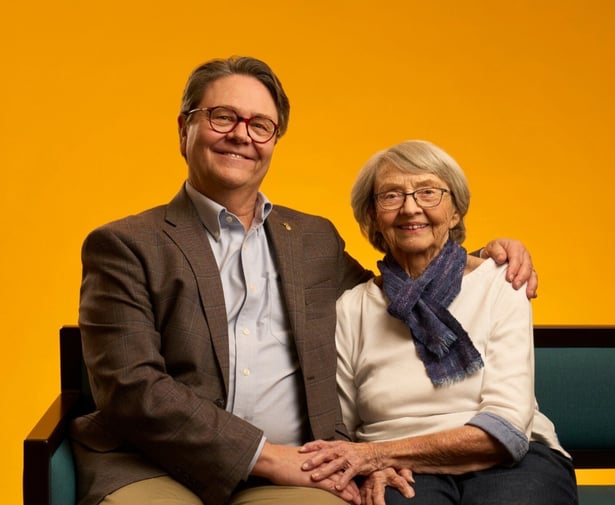 At ECH's Memory Care Assisted Living neighborhood, she found it all. Betty enjoys performances by visiting musicians and even discovered a newfound love for painting, but most importantly—Mark has peace of mind that his mom is in a safe place that brings her restored joy and connection. "They take care of all my needs," Betty told Mark. For him, seeing that ease return to her voice was everything.
Read Mark and Betty's Story: Her Smile is Everything: Finding the Memory Care Mom Deserved
Still Unsure Between Assisted Living and Memory Care Assisted Living?
For guidance exploring ECH’s senior living options, take our short survey—a quick 4–5 minute tool to help you determine the best fit for you or your loved one.

Tour Episcopal Church Home Memory Care
Take the next step. Contact Elizabeth Pace, director of community relations, at 502.736.8043 or epace@erslife.org to schedule a complimentary tour of ECH's Memory Care Assisted Living neighborhood and no-cost printed copy of our Dementia Guide—a clear, compassionate resource designed to answer the questions families most commonly face on this journey.